In 2026, Google Maps has solidified its position as the primary discovery channel for local B2B lead generation. With over 200 million businesses and 4,000+ distinct categories, it offers a dynamic, “intent-rich” dataset that static directories like Dun & Bradstreet simply cannot replicate.
However, the days of manually copying names and phone numbers are dead. For the modern GTM engineer or growth hacker, the value lies in building an automated, scalable extraction pipeline that turns raw map data into actionable revenue.
Here is your technical guide to scraping Google Maps in 2026, avoiding the common pitfalls of result limits, and leveraging a Bring Your Own Key (BYOK) architecture to slash costs.
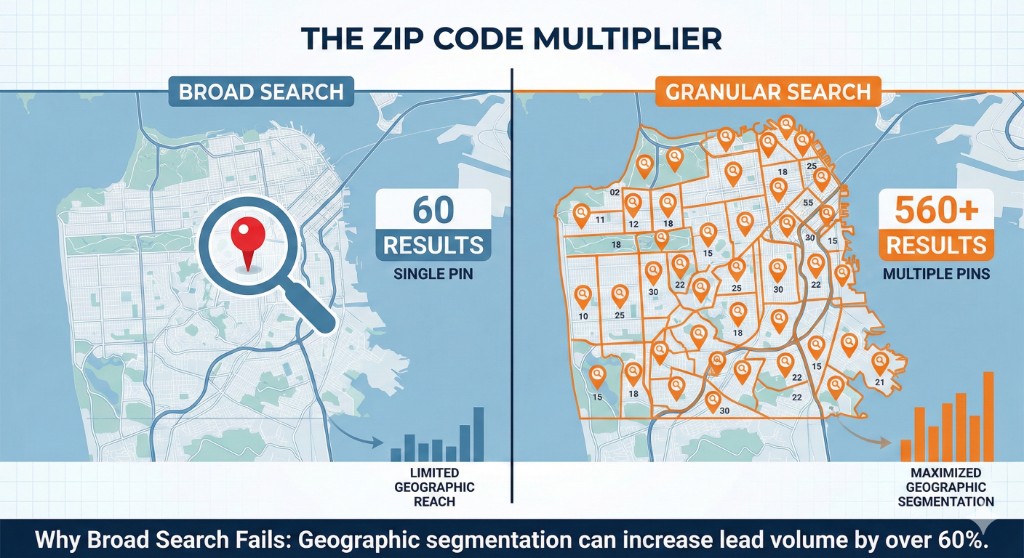
The “Zip Code Multiplier” for Maximum Coverage
Most scrapers fail because they search too broadly. If you query “Plumbers in New York,” Google Maps (and the standard Places API) will cap your results—often returning only 60 to 120 listings regardless of how many actually exist.
In 2026, the winning strategy is geographic segmentation. By breaking target areas into granular units like ZIP codes or neighborhood grids, extraction tools can surface significantly more listings that would otherwise be buried by Google’s relevance algorithms.
The Math of Segmentation:
- Broad Search: “Plumbers in Manhattan” → ~187 results.
- Granular Search: Subdividing Manhattan by ZIP codes → ~560 listings.
This “grid-scanning” technique is essential for building a complete view of a local market rather than just seeing the top-ranking businesses.
Enrichment: Beyond the Map Pin
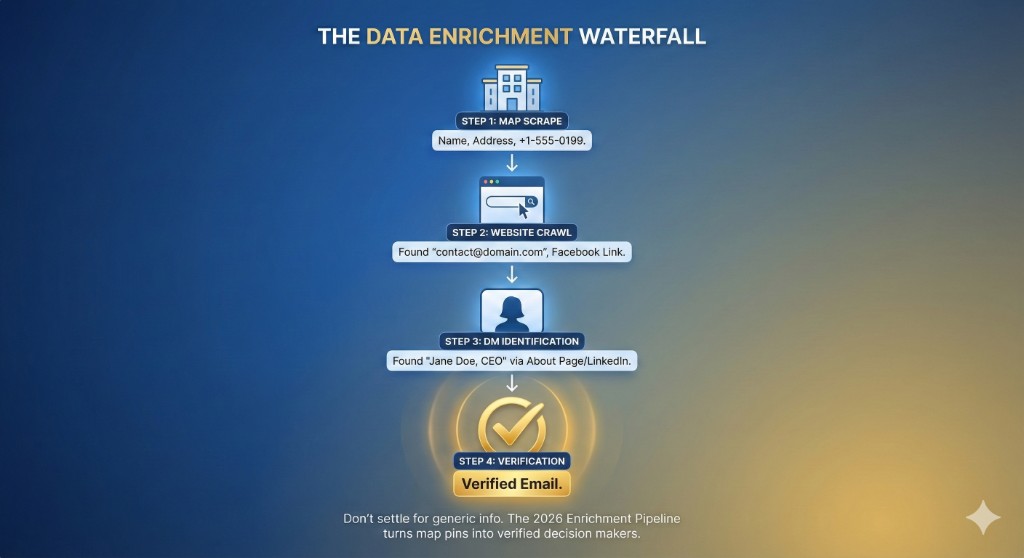
Scraping the map is only step one. A raw Google Maps export gives you a business name, address, and phone number—but often lacks the direct decision-maker contact info needed for high-conversion outreach. To build a functional lead list, you must perform a “deep dive” extraction pipeline:
- Core Data: Extract business name, address, phone, and website URL.
- Sentiment Data (The Hidden Signal): Review counts and ratings are now used as proxies for lead qualification. A business with a high rating but few reviews often signals a “rising star,” while high negative review volumes can indicate a service gap you can exploit.
- Digital Footprint (Contact Mining): Modern scrapers automatically visit the business website found on Maps to harvest email addresses and social media links (LinkedIn/Facebook) that aren’t listed directly on the Google profile.
The ZeroGTM Pipeline: This is where ZeroGTM shines. It automates this waterfall: Map Scrape → Clean/Validate Website → OpenWeb Ninja (Contact Mining) → Decision Maker ID → Verification.
The Economics of Extraction: API vs. BYOK
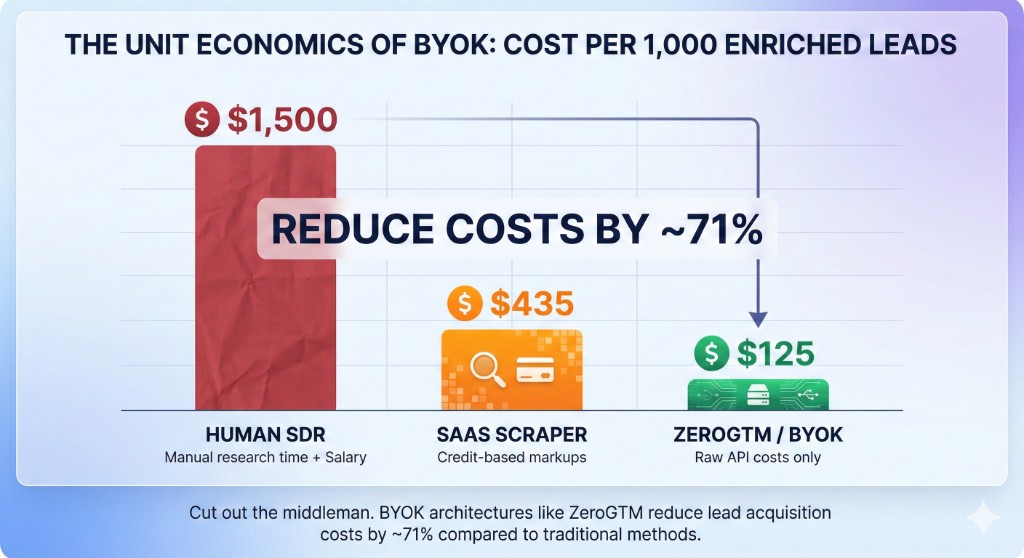
In 2026, the tool landscape is divided. On one side, you have cloud-based SaaS platforms (like Outscraper or Apify) and Enterprise APIs (like Bright Data). These are powerful but typically charge a premium per record or credit.
On the other side is the Bring Your Own Key (BYOK) revolution.
- The SaaS Tax: When you use a standard all-in-one tool, you pay a markup on every data point to cover their infrastructure and profit margins.
- The ZeroGTM Approach (BYOK): Instead of paying a markup on every row, ZeroGTM allows you to plug in your own credentials—such as a RapidAPI key for Google Maps data or Anymail Finder for verification.
This means you pay the raw provider cost directly. By removing the middleman, you can scrape and enrich thousands of leads for a fraction of the cost of a managed subscription, all while keeping the data secure in your own self-hosted PostgreSQL database.
Conclusion: Own Your Pipeline
Stop treating Google Maps scraping as a manual chore or a black-box service you rent. The future of GTM engineering belongs to those who own the infrastructure.
By automating the pipeline—from the initial zip-code level scrape to website validation and decision-maker finding—you turn the world’s largest directory into a predictable, high-margin revenue engine.
Ready to build your own engine? ZeroGTM offers a mobile-first, open-source pipeline that puts you in control.
Get started with the self-hosted setup →
Enrichment pipeline (step-by-step) →
Pricing & plans →
AI SDR vs Human SDR: Real cost breakdown (2026) →
Open source lead enrichment tools compared → · Cold email deliverability guide (2026) → · BYOK lead generation →